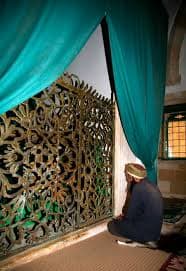
The Soul of Cyprus
The Island of the Blessed
In the sapphire heart of the Mediterranean, where waves carry the whispers of revelation, lies Cyprus — Jazīrat Al-Barakah, the Island of Blessing.
It is a land where East meets West, where the soil itself bears the footprints of the Sahabah, and where one of the most sacred names of the Ahlul Bayt rests upon European soil.
Here, faith crossed the sea not as an invader, but as a guest of mercy — a tide of remembrance guided by the Divine command,
“ Travel throughout the land and see how He originated the creation.”
The First Call – The Era of the Companions
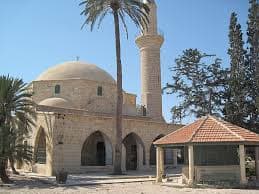
During the noble reign of Khalifa Uthman Ibn Affan (May Allah be pleased with him), Islam reached Cyprus in the year 649 CE — the first wave of light touching the island’s shores.
It was not a conquest of steel, but of hearts — carried by men and women of sincerity whose footsteps were guided by faith alone.
Among them shone the blessed presence of The Grand Waliyyatu Allah, Ummu Haram bint Milhan (May Allah be pleased with her) — from the noble household of the Prophet ﷺ, and among the earliest companions of the Messenger of Allah.
She was the sister of The Grand Waliyyatu Allah, Umm Sulaym (May Allah be pleased with her) and the wife of Sheikh, Ubadah Ibn as-Samit (May Allah be pleased with him) — one of the first teachers sent to the people of Medina.
When the Muslim fleet, commanded by Sheikh, Amir Mu‘awiyah Ibn Abi Sufyan (May Allah be pleased with him), set sail by the permission of the Khalifa, Ummu Haram joined as one of the noble women who served the soldiers of Allah.
The Prophet ﷺ had once foretold:
“The first army from my Ummah to sail upon the sea has made Paradise obligatory upon themselves.” (Sahih Al-Bukhari)
And so she sailed — her heart filled with certainty, her soul already yearning for its return to the Divine.
The Maqam of Light – Ummu Haram (May Allah be pleased with her)
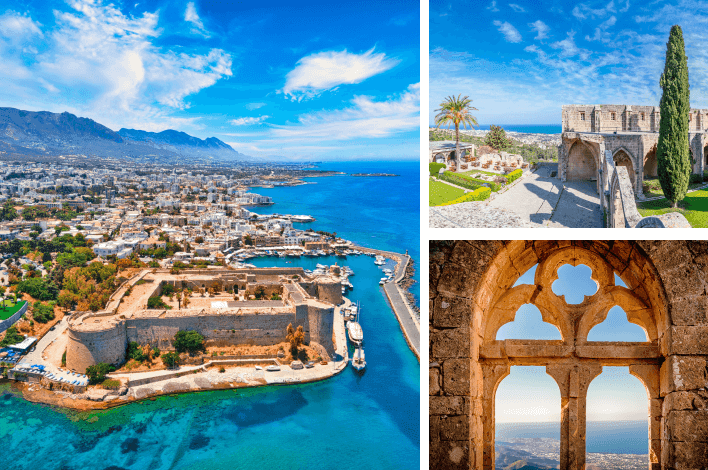
Upon reaching Cyprus, Ummu Haram (May Allah be pleased with her) fell from her horse and returned to her Lord — a martyr upon the blessed land of Europe. Her resting place, near Larnaca, became known as Hala Sultan Tekke, a radiant maqam that still glows with spiritual light. For over thirteen centuries, this sacred site has been a place of peace, visited by believers from every corner of the Ummah.
It remains — to this very day — the only known Maqam of Ahlul Bayt on European Union soil. Here, the Mediterranean breeze carries the scent of Madinah, and the doves circle endlessly above her dome, as if in perpetual tawaf.
Her maqam is not merely a grave; it is a living witness — a covenant between heaven and earth that the family of the Prophet ﷺ once walked upon this land. It is a reminder that the ocean itself bows to the will of Allah, and that the light of the Messenger ﷺ reaches wherever sincerity sails.
The Golden Age – The Legacy of the Ottomans
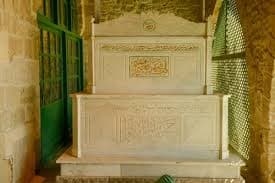
Centuries later, during the Ottoman era, the light of Islam returned to Cyprus once more. Under the banner of Sheikh Sultan Selim II (May Allah be pleased with him) and his successors, Cyprus became a refuge of faith, a beacon of tolerance, and a haven for scholars and artisans alike.
The Ottomans restored and guarded the Maqam of Ummu Haram, raising the Hala Sultan Tekke into one of the most revered sanctuaries in the Islamic world — second only to the Haramain and Al-Aqsa in its barakah for travelers of remembrance.
Among the great scholars who spread knowledge during this time were:
- Sheikh Sheikh Hasan Al-Siqilli (May Allah be pleased with him) — who carried the spiritual sciences of Sicily into Cyprus.
- Sheikh Abu Yusuf Al-Qibti — known for his works on Qur’anic tafsir and hadith in the Ottoman archives of Nicosia.
- Imam Yusuf Efendi of Famagusta — the teacher of Shari‘a who trained generations of imams for the Mediterranean.
- Their mosques still stand, their wells still flow, their dhikr still echoes in the night winds that caress the island’s olive trees.
The Living Heritage – The Island of Barakah
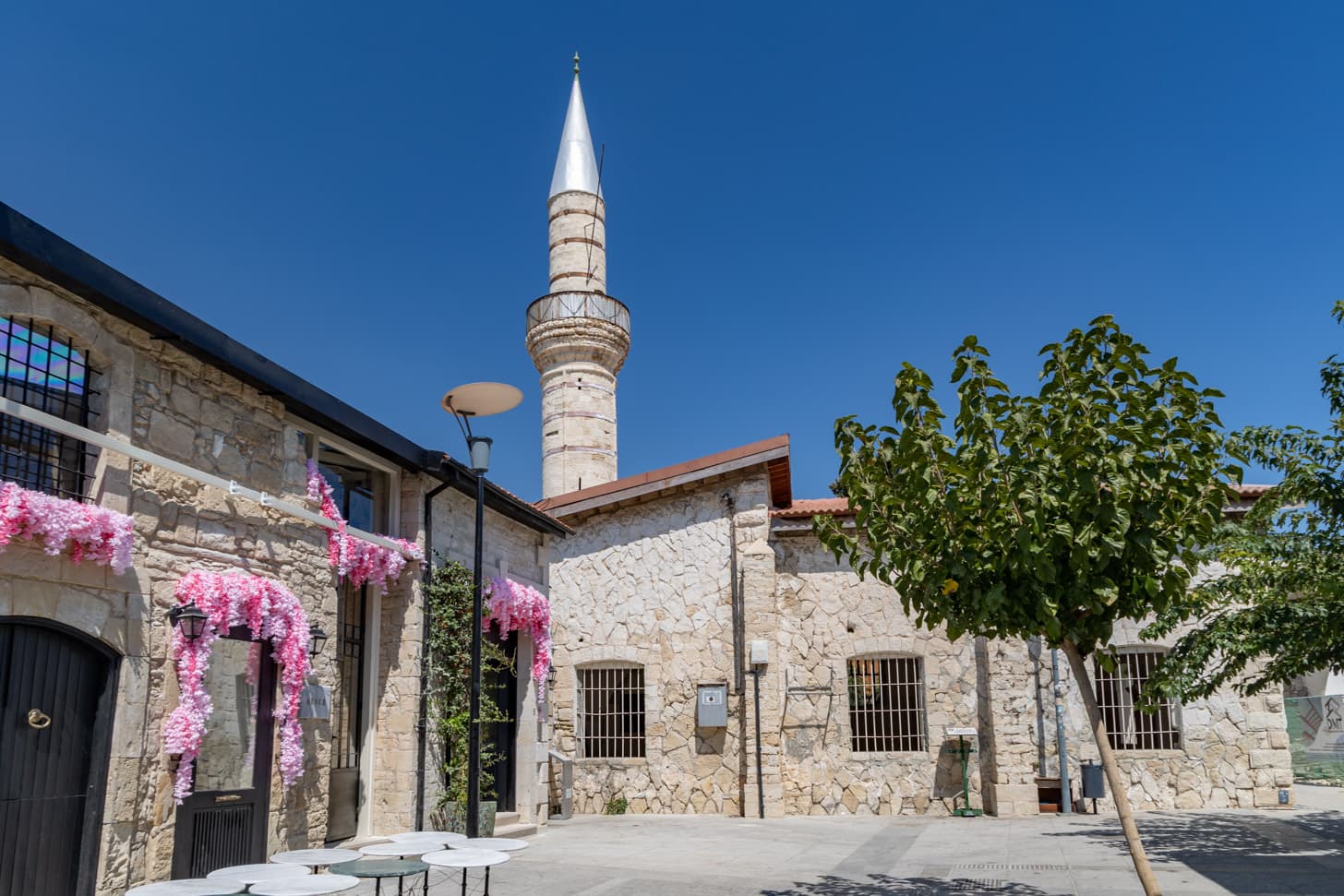
To this day, the Muslim community of Cyprus preserves its adhan, its adab, and its love for the Prophet ﷺ — quietly, steadfastly, as guardians of remembrance amidst the noise of modernity. In Larnaca, Nicosia, and Limassol, the traces of Ottoman minarets and Qur’anic inscriptions whisper that Islam never departed — it simply waits to be remembered.
Every stone of the Hala Sultan Tekke proclaims, “The family of the Messenger has been here.” Every ocean wave repeats, “The Ummah once passed this way.”
This island, kissed by sunlight and sanctified by sacrifice, stands as a testament that the Mediterranean is not a border, but a bridge — a sacred link between the early companions and the Ummah of today.
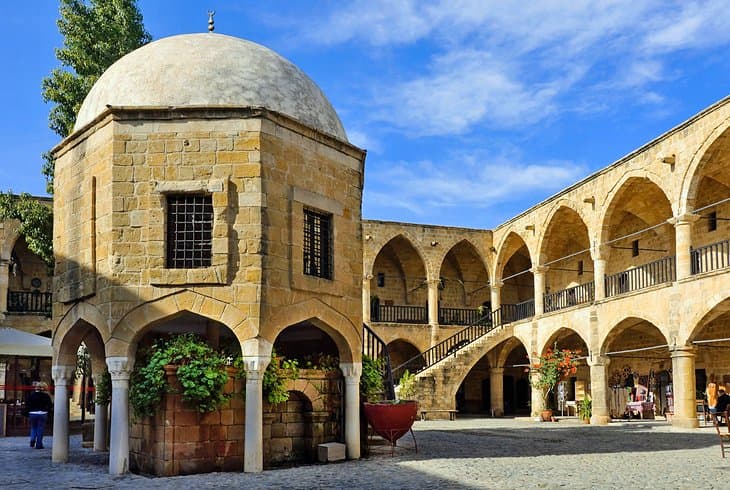
The Call to Journey
Through Silatu Arrahim Journeys, the Ummah is invited to walk once more upon the land of the Sahabah — to stand at the maqam of Ummu Haram (May Allah be pleased with her), to gaze upon the turquoise dome that shelters her soul, and to feel the Divine breeze that carries the memory of the Prophet ﷺ across the sea.
This is not travel — it is return. It is remembrance, renewal, and the revival of a forgotten light.
“ Indeed, the friends of Allah shall have no fear, nor shall they grieve.” Surah Yunus (10:62)
Heritage is not something of the past, but a living servant of the Divine… Crossing Time, Space, and Place — guided by the Divine. The Past, Presence, and Future are all One United. The actions of today’s presence are the heritage of tomorrow.
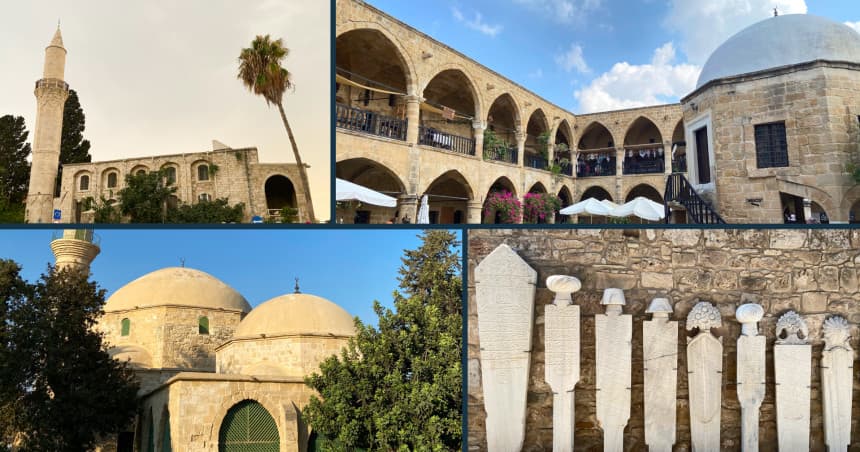
Heritage Alive
O Qubrus, emerald set within sapphire waters,
where dawn rises like a whispered bismillah
and the sea carries verses older than conquest.
You were never merely an island…
you were a mihrab between continents,
a resting place for caravans of spirit,
a refuge for hearts seeking the Divine in motion.
Here, the adhan once kissed the salt wind,
minarets mirrored in harbors of olives, copper, and silk,
scholars, sailors, and saints sharing bread beneath the same moon,
trading not only goods, but barakah itself.
From Larnaca’s shore where Umm Ḥarām sleeps in tranquility,
to Girne’s silent fortresses remembering Quran on horseback,
from Lefkoşa’s scholars shaping treaties with ink before swords,
to Famagusta’s schools where science bowed to revelation,
Cyprus was a garden of exchange, not empire—
a doorway, not a boundary.
O island where crusade and crescent intertwined in contest,
where the faithful carried knowledge across tides,
where Sufi breaths softened hardened hearts,
and diplomacy wore the garment of dhikr.
Your earth absorbed the footsteps of companions,
your harbors cradled travelers of Allah,
your stones still hold the echo:
“We arrived as guests of God,
we departed as witnesses to God.”
O Cyprus, you were not conquered by time,
you were hidden in its folds.
The wind did not steal your story—
it memorized it.
The waves did not silence your call—
they carried it outward.
And even now, beneath the churches stood upon mosques,
beneath the marketplaces built upon madrasas,
beneath the footfalls of the unaware—
Islam still remembers itself in you.
For you were not the remnant of a chapter,
you were a page bookmarked by destiny.
Sicily faced the west and guided Europe,
Andalusia bowed toward knowledge and refinement,
but you, Cyprus, stood in the center—
a heart, not a shore.
A heart that once beat with revelation,
built with trade, tempered with prayer,
and illuminated by those who saw the unseen.
So we say today:
O Qubrus, garden of scholars and sailors,
your past is not mourning, it is momentum.
Your legacy is not dust, it is a compass.
You do not need resurrection—
only recognition.
For the Ummah does not reclaim by earth…
it is remembered by the soul.